
Fragile-only packing focuses on protecting delicate items without packing everything in your home or business. It allows you to handle general packing yourself while ensuring breakable or high-risk items receive proper protection, especially where damage risk is concentrated. Global 360 Moving & Junk Removal provides this option for customers who want targeted support without committing to full-service packing.
This service becomes important when a small portion of your items carries most of the risk. In most moves, damage does not come from volume, it comes from items that cannot tolerate vibration, pressure, or improper handling. Fragile-only packing isolates those items and applies controlled protection where it matters most.
What Fragile-Only Packing Means
Fragile-only packing is a selective service that focuses on items likely to break, shift, lose calibration, or lose value if packed incorrectly. Instead of packing entire rooms, the process targets specific items that require extra care, such as glass, electronics, artwork, and irregular or sensitive materials.
Items like clothing, books, and durable household goods are typically excluded unless specified. What qualifies as fragile is determined during assessment, based on both customer input and how each item responds to movement, pressure, and handling conditions.
A key distinction is that fragile-only packing is not based on appearance. Some items that look durable fail under transport conditions, while others that appear delicate can handle standard packing. The decision is based on how the item behaves under vibration, stacking pressure, and movement.
Why Fragile Items Require Specialized Packing
Fragile items fail under conditions that standard packing does not address. Standard packing focuses on containment, while fragile packing focuses on controlling movement, absorbing impact, and distributing pressure.
Risk of Breakage During Transport
Transport introduces vibration, impact, and compression at different stages of the move. Vibration occurs continuously and causes items to shift over time, while impact happens during loading, unloading, and movement inside the truck. Compression occurs when boxes are stacked and weight transfers downward.
Fragile items do not absorb these forces effectively. Without proper isolation and support, small movements lead to internal stress, surface contact, and eventual breakage. Fragile packing reduces this risk by limiting movement, absorbing shock, and controlling how weight is distributed across the item.
Irregular Shapes and Delicate Materials
Irregular shapes create unstable packing conditions because they do not distribute pressure evenly. Uneven surfaces, thin edges, and protruding components create pressure concentration points, which become failure zones during transport.
Materials such as glass, ceramic, resin, and composite plastics respond differently to stress. Some crack under compression, while others fail under vibration. Because of this, packing must be based on how the material behaves, not just the size or shape of the item.
High Value or Sentimental Items
High-value items require a lower tolerance for risk because even minor damage can result in total loss of value. Sentimental items increase that sensitivity further, as they often cannot be replaced.
In these cases, packing focuses on redundancy. Additional layers of protection reduce exposure to common failure points, and placement within the truck becomes part of the protection strategy, not just the packing method.
Types of Items Included in Fragile-Only Packing
Fragile-only packing applies to items where failure is likely under normal moving conditions, even with careful handling. It typically excludes oversized specialty items, hazardous materials, or items that require custom crating unless arranged separately.
Inclusion is based on how an item responds to movement and pressure, not just how fragile it appears. Some items are included due to internal sensitivity, while others are included because of structural weakness or surface vulnerability.
Glassware and Dish Sets
Glassware and dish sets are prone to failure due to contact and stacking pressure. Plates, bowls, and glasses create multiple contact points when packed incorrectly, increasing the chance of chipping or cracking.
Proper packing separates each item, supports it individually, and prevents direct contact during transport. Orientation also matters, as incorrect positioning increases pressure on weak points like rims and edges.
Electronics and TVs
Electronics carry both external and internal risk. Screens are vulnerable to pressure and impact, while internal components can shift or loosen under vibration.
Original packaging provides the most reliable protection because it is designed for transport. When it is not available, alternative packing must recreate spacing, cushioning, and stabilization. Large TVs must remain upright, as flat positioning increases pressure on the screen and raises the risk of internal damage.
Artwork, Mirrors, and Decor
Artwork and mirrors present risk due to their flat structure and surface fragility. While pressure can spread across the surface, structural weakness makes them prone to cracking or bending.
Frames introduce additional stress points, especially at corners and edges. Proper packing stabilizes the surface while reinforcing vulnerable areas to prevent flex and impact damage.
Antiques and Specialty Items
Antiques often contain aged materials that are more fragile than modern equivalents. Over time, joints weaken and finishes become more sensitive to movement and vibration.
Some antiques are structurally fragile, while others are surface fragile. A solid wood piece may handle weight but fail at joints, while decorative finishes may be damaged without affecting structure. These differences require evaluation before packing, as standard methods may not apply.
Materials and Techniques Used for Fragile Packing
Fragile packing uses layered protection strategies, where each layer controls a different type of risk. The goal is to limit movement, absorb impact, and distribute pressure evenly across the item.
Protective Wrapping and Cushioning
Wrapping protects surfaces from scratches and direct contact, while cushioning absorbs shock and prevents internal movement. Both are required, as wrapping alone does not stop movement and cushioning alone does not protect surfaces.
Together, these layers reduce both surface damage and structural stress during transport.
Double Boxing and Reinforcement
Double boxing creates separation between the item and external pressure. The inner box stabilizes the item, while the outer box absorbs force and stacking weight.
This method is used for heavier fragile items, high-value items, or items with structural sensitivity. Reinforcement ensures the box maintains its shape under load, preventing compression from transferring directly to the item.
Labeling and Handling Protocols
Labeling affects how items are handled throughout the move. It influences stacking order, placement within the truck, and handling priority during loading and unloading.
Handling protocols ensure consistency from packing to delivery. Without consistent handling, even well-packed items remain exposed to unnecessary risk.
At this stage, many customers choose to involve professional fragile item packing services to ensure both packing and handling follow the same standards from start to finish.
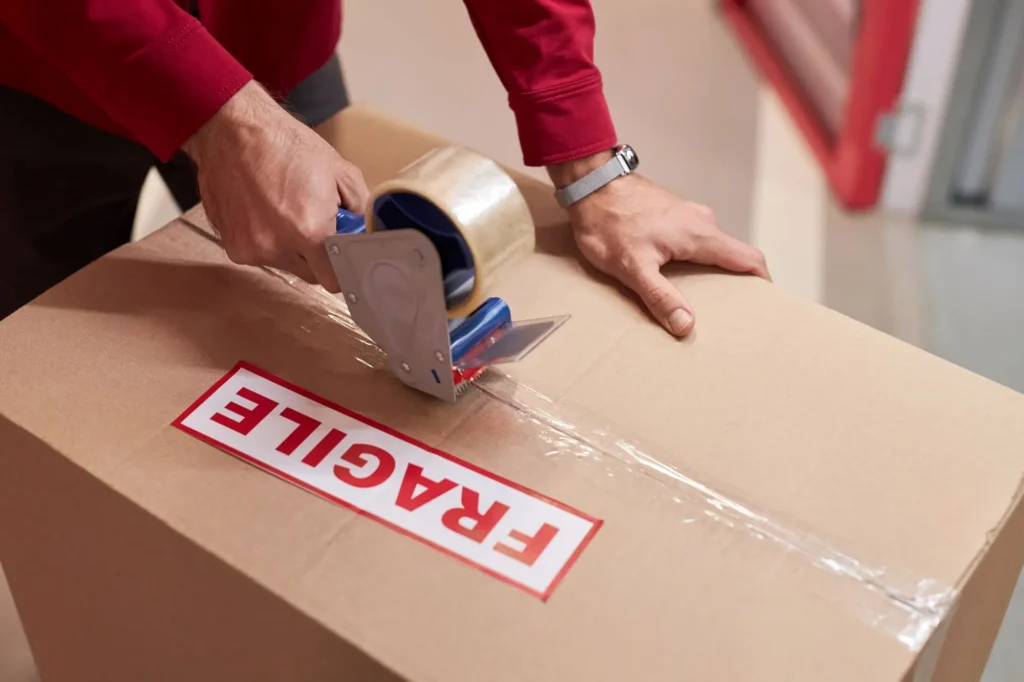
When Fragile-Only Packing Is the Right Choice
Fragile-only packing works best when a small portion of items carries most of the risk. It allows targeted protection without committing to full packing.
This option is suitable when most items are durable, but certain items require controlled handling due to value, material, or structure. It is also useful when time is limited but fragile items cannot be packed quickly without increasing risk.
It may not be suitable when most items are fragile or when the move requires full coordination across all contents. In those cases, broader packing support may provide more consistent protection.
Fragile Packing vs Full Packing Services
The difference between fragile-only packing and full packing is both scope and how risk is managed across the move. Fragile-only packing isolates high-risk items and applies precision methods, while full packing applies consistent methods across all items.
This creates different handling conditions during loading. Fragile-packed items require controlled placement and reduced stacking pressure, while self-packed items may not meet the same standard. Coordination between these two groups becomes critical to maintaining protection.
Common Mistakes When Packing Fragile Items Yourself
Packing fragile items without proper control leads to predictable failures that are often avoidable.
Common mistakes include:
- Placing items too close together, increasing contact points
- Leaving empty space, allowing movement during transport
- Applying pressure to fragile surfaces
- Using boxes that cannot support weight or shape
- Overpacking boxes, increasing load stress
- Ignoring orientation, such as laying items flat when vertical support is required
These mistakes result from misunderstanding how movement, pressure, and material response interact during a move.
Choosing the Right Packing Option for Your Move
Choosing the right packing approach depends on risk concentration rather than total item count. A move with a small number of high-risk items benefits from fragile-only packing, while a move with widespread fragility may require full packing support.
The decision should consider how many items are fragile, how difficult they are to handle, and the impact of potential damage. Fragile-only packing allows targeted protection while maintaining control over cost and effort.
For those evaluating options, reaching out to request a packing service quote helps clarify what level of support is needed based on the items involved.